
Foreign Investment in Tourist Vessels in the Maldives – A Practical Overview
18 September 2026
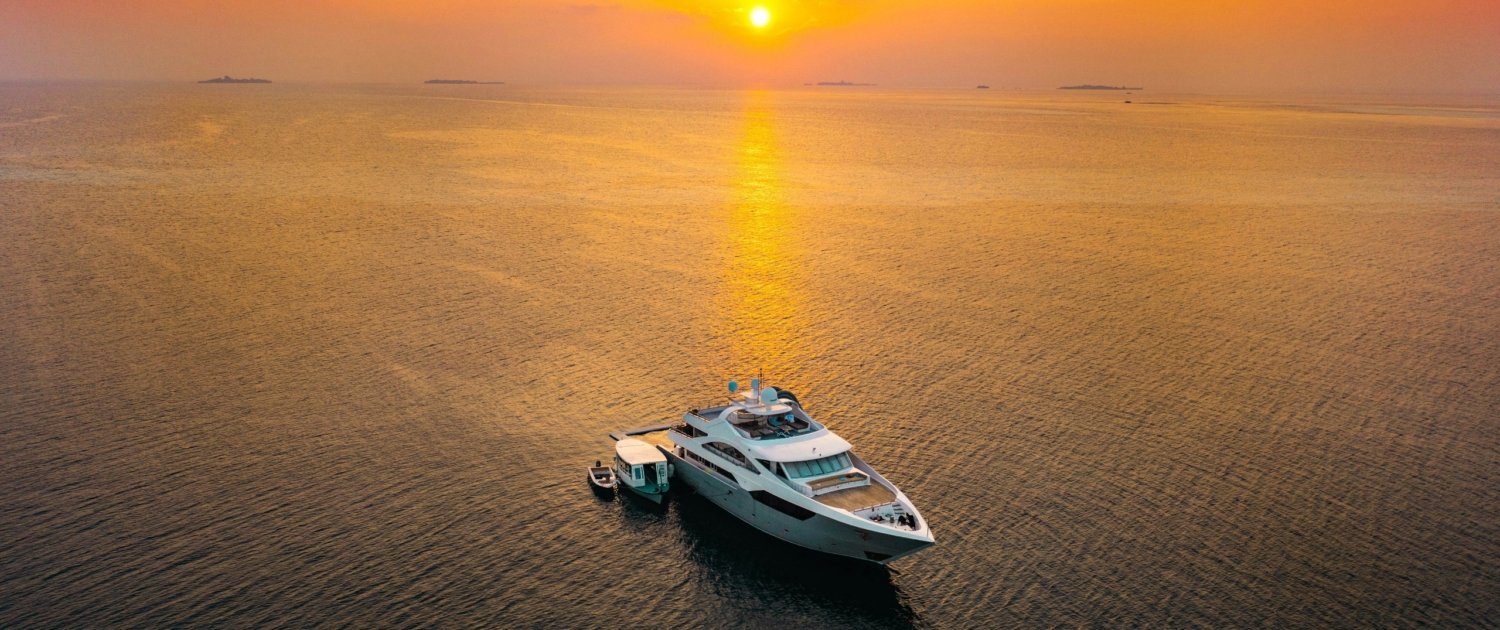
The Maldivian liveaboard sector offers a distinct route into the country’s tourism market – one that requires no island lease and no land-based development programme. For foreign investors, however, tourist vessels are governed by their own licensing regime and their own entry thresholds. This guide sets out the key considerations for structuring, licensing and operating a tourist vessel investment in the Maldives.
1. Introduction
A “tourist vessel” is defined under the Maldives Tourism Act (Law No. 2/99) as a seagoing vessel developed, in compliance with standards determined by the Ministry of Tourism, to provide board and lodging to tourists for a payment fixed at a rate per day of stay on board.
Under the Tourism Act, a tourist vessel is a distinct category of tourist establishment – separate from tourist resorts, tourist hotels and tourist guest houses – and is licensed and regulated on its own terms. The commercial consequence is straightforward. The investment is in a mobile asset rather than a leasehold interest in land, and the regulatory pathway runs through two authorities rather than one.
Foreign direct investment (“FDI“) in the tourist vessel sector is primarily regulated by the following:
- Foreign Investment Act (Law Number: 11/2024);
- New Investment List, which came into effect on 8 October 2025;
- Maldives Tourism Act (Law No. 2/99) and all amendments thereto; and
- Regulation on Operating Tourist Vessels in the Maldives (effective 1 January 2008) and all amendments thereto (the “Tourist Vessel Regulation” or “Regulation“).
Two Government authorities are engaged. Tourism licensing sits with the Ministry of Tourism and Civil Aviation (the “MOT“). Vessel registration and certification sit with the Ministry of Economic Development, Transport and Trade (“MEDT“), which also administers foreign investment and company registration. Where this guide refers to registration and certification of the vessel itself, it refers to that ministry as “the Ministry responsible for transport”.
Read more on the New Investment List here: https://bnilaw.co/maldives-new-foreign-investment-list-2025/
2. Foreign Investment in the Tourist Vessel Sector
Under the New Investment List published by MEDT on 8 October 2025, tourist vessels sit among the more open categories in the hospitality and tourism sector. 100% foreign ownership is permitted, subject to a minimum investment of USD 1,000,000 and a minimum vessel size.
|
Maximum Shareholding Allowed to Foreign Investors |
Minimum Investment Amount | Vessel Size Threshold | Foreign Investment Licence Term |
|
100% |
USD 1,000,000 | Minimum 20 rooms and 40 beds |
5 years (renewable) |
The New Investment List states the threshold as 40 beds and above. It does not restate the room requirement. The requirement of a minimum of 20 rooms nevertheless continues to apply under the Tourist Vessel Regulation as a condition on foreign operation, so a vessel must satisfy both limbs. A vessel that meets the bed count but falls short on rooms does not qualify under the current regulatory framework.
The Sector List does not prescribe a fixed investment period for this category. In practice, the foreign investment licence is issued for a term of 5 years, at which point the investment is reviewed on renewal. Investors should expect the deployment of the minimum investment to be assessed against that renewal cycle rather than against a separate statutory deadline.
What this means for investors: the capacity threshold is a gating item, not a matter to be resolved during the approval process. A vessel below the prescribed size cannot be brought within the FDI framework at all, whatever the quality of the asset or the strength of the commercial case. Investors evaluating an existing vessel for acquisition, or commissioning a newbuild, should confirm capacity against both limbs before committing to the transaction.
3. Obtaining the Tourist Vessel Operating Licence
No tourist vessel may be operated in the Maldives without an operating licence issued by the MOT. Under the Tourism Act, the licence is issued only where the vessel and its facilities comply with MOT guidelines, the services determined by the MOT are available on board, and the vessel is duly registered with the Ministry responsible for transport.
Documents required to obtain the Tourist Vessel Operating Licence
The following are to be filed with the MOT:
- Application Form for the approval of tourist vessel operation in the Maldives, in the form prescribed under the Regulation.
- Vessel Registration Certificate, issued by the Ministry responsible for transport.
- Safety Certificate, issued by the Ministry responsible for transport.
- Passenger Carrying Certificate, issued by the Ministry responsible for transport.
- Where the applicant is a foreign individual: a copy of the applicant’s passport.
- Where the applicant is a company:
- Certificate of Registration;
- Memorandum of Association – including the operation of tourist vessels as an objective of the company;
- Articles of Association;
- Up-to-date Company Profile Sheet issued by MEDT, confirming the current shareholders and directors; and
- Copies of valid identification documents of all shareholders.
- Where the applicant is not the owner of the vessel: a lease agreement between the owner and the applicant, containing a clause permitting the applicant, as lessee, to obtain the Tourist Vessel Operating Licence in its own name and to operate the vessel as a tourist vessel.
- Licence application fee of MVR 5,000 (approximately USD 324).
Although not obligatory, it is best practice to pre-clear the application documents with the MOT so that they are in agreed form before formal submission. This also allows the MOT to prepare the registration documents without delay.
Inspection before Grant of Licence
The Tourist Vessel Operating Licence is issued only after the MOT has inspected the vessel and confirmed that the facilities and services prescribed under the Regulation are available on board. The inspection is not a formality. It is the point at which decisions taken at the shipyard are measured against the Regulation.
Duration & Renewal of License
The Tourist Vessel Operating Licence is issued for a period of 5 (five) years, in line with the licensing periods prescribed under the Tourism Act for tourist establishments generally.
Renewal is to be initiated by the operator no later than 15 days before expiry of the current licence period, and on renewal the licence is issued for a further five years. Where the renewal application is submitted after expiry, the licence approval fee of MVR 5,000 becomes payable before the licence is re-issued.
Change of Operator and Change of Ownership
The Regulation treats a change of operator and a change of owner as two different events, with two different procedures.
Where the operator of the vessel changes, a fresh application must be filed with the MOT meeting the requirements of Section 3 of the Regulation – the same set of documents required on a first application. All Government dues, including taxes and any outstanding payments owed by the applicant or by the transferor, must be settled before the transfer takes effect. There is no separate prior approval step; the MOT gives its approval through the application itself. The existing licence then continues, updated to record the new operator, rather than a new five-year term being issued. A fee of MVR 5,000 applies.
Where the owner of the vessel changes, the MOT must be notified within 7 days. The notification must be accompanied by the new vessel registry, the new safety certificate and the new passenger carrying certificate.
What this means for investors: an incoming operator inherits the consequences of the transferor’s tax and payment position. Unsettled dues will hold up the transfer regardless of the incoming operator’s own standing, so this should be checked early in any acquisition. Where a transaction involves both a new owner and a new operator, the two processes run to different timelines and should be planned accordingly.
4. Design and Construction Standards
Tourist vessels are subject to detailed technical and operational standards prescribed under the Regulation. These govern the vessel’s fit-out and the facilities to be provided on board, and are minimum requirements in law – an operator is free to exceed them to elevate the guest experience.
The Regulation prescribes standards and requirements in respect of the following:
- Guest cabins
- Guest bathrooms
- Dining area
- Kitchen
- Bar and the service of alcoholic beverages
- Crew and staff accommodation and facilities
- Fire-extinguishing equipment
- Disaster Management Plan
- Abandon-ship procedures
- Water, food storage, pest control and lighting
What this means for investors: these are construction-stage considerations, not commissioning-stage ones. Retrofitting a completed vessel to meet bathroom ratios, staff access separation or kitchen ventilation requirements is expensive and, in some cases, structurally impossible. The Regulation should be worked through with the shipyard and naval architect at design stage, and checked again on completion, ahead of the MOT inspection.
5. Other Key Considerations
Crew and Command
The captain must hold a valid licence issued by the relevant Government authority, qualifying him to navigate and command a tourist vessel of the size, tonnage and passenger capacity of the vessel in question. Every crew member and staff member must hold a signed written employment contract with the operator or owner. Employment of crew and staff is otherwise governed by the Employment Act (Law No. 2/2008).
Sequencing of Approvals
The vessel documentation at items 2 to 4 in Section 3 above – the Registration, Safety and Passenger Carrying Certificates – is issued by the Ministry responsible for transport and is a precondition to the MOT licence. These should be progressed in parallel with, and completed ahead of, the operating licence application.
The company documentation at item 6 falls out of the incorporation and foreign investment registration workstream. The Memorandum of Association should expressly include the operation of tourist vessels among the company’s objectives; an omission here is simple to correct at incorporation and troublesome to correct later.
6. Taxes, Guest Records and Reporting
Taxes Applicable to Tourist Vessel Operations
| # | Tax Type | Applicable Rate | Notes |
| 1. | Tourism Goods and Services Tax (TGST) | 17% | Applicable to goods and services supplied under the Tourist Vessel Operating Licence. |
| 2. | Goods and Services Tax (GST) | 8% | Applicable to taxable supplies falling outside the scope of the Tourist Vessel Operating Licence. |
| 3. | Green Tax | USD 12 per tourist per day of stay | Collection, filing and payment are obligations of the vessel operator. |
| 4. | Corporate Income Tax | 15% | Calculated on taxable profits exceeding MVR 500,000 (approximately USD 32,425). |
| 5. | Non-Resident Withholding Tax (WHT) | 5% or 10% | Depending on the nature of the payment made to non-resident persons. |
| 6. | Employee Withholding Tax (PAYE) | Per applicable brackets | Calculated on employee remuneration exceeding MVR 60,000 (approximately USD 3,891). |
Note: The tax position of a tourist vessel operation may vary depending on the structure and activities of the business. Investors are advised to seek tailored advice from a qualified tax advisor.
Guest Records and Reporting
Tourist vessel operators are required to maintain and submit the following, in the form and manner prescribed under the Regulation:
- Guest Registry – recording the check-in and check-out details of every tourist carried – including the details provided in the sample guest registry in Schedule 2 of the Regulation.
- Guest Registration Card – completed in respect of each tourist – including the details provided in the sample guest registry template in Schedule 3 of the Regulation.
- Monthly Occupancy Report – submitted to the MOT on or before the 7th day of the following month – in the format provided in Schedule 5 of the Regulation.
Separately, information on tourists accommodated on board during the preceding month must be filed with the Maldives Inland Revenue Authority by the 8th day of the current month, in the manner and format determined by that Authority.
7. Conclusion
The tourist vessel sector gives foreign investors a route into Maldivian tourism that is fully open to 100% foreign ownership and free of the land-lease complexity that governs resort investment. The trade-off is a dual regulatory pathway – maritime certification alongside tourism licensing – and a capacity threshold that must be satisfied at the point of asset selection rather than resolved later.
Three things matter most at the outset: confirming that the vessel meets both limbs of the capacity threshold, building the Regulation’s facility standards into the design rather than retrofitting them, and sequencing the transport certifications ahead of the MOT licence application. Early legal advice materially reduces execution risk in each.
